Saturday, February 21, on the train to Plauderville, which is a station in Garfield. I’m going solo since Mike was called back to his crib to meet his new parole officer. He wasn’t happy about it; he was looking forward to seeing Elaine again, but it’s a new parole officer, and she’s got to flex.
It’s been good having Mike around, and he might come back tonight but I have a feeling he won’t make it.
Bill is still south of the Mason-Dixon line, and he’s due back tomorrow, just in time for a major blizzard that has been forecast.
Lunch with Elaine, Meghan, and Shelby was pleasant. I had the usual diner fare, hamburger deluxe, and a chocolate shake. Then Elaine and I went to the house and sorted through some of Frank’s CDs to sell or donate somewhere. Elaine is overwhelmed by the number of CDs and magazines Frank had accumulated.
Getting to the train station was difficult. Garfield PD sent a text message telling residents to stay indoors. That was not an option as we were outside and planning on getting to the train. The station I bought a ticket for was unreachable, so we went to the next station.
A few minutes later, I boarded the train and was rolling towards Hoboken. As we left Secaucus, the train died. An Eastern European woman complained to the conductor that she had tickets to a show and she might miss it, and wanted money right then and there.
6 or 7 of us in the dead car had a good time laughing at her.
Now it is Monday, February 23, 2026. It’s a snow day. About 18 inches fell overnight. I was told via text that the fruit stands would be closed today, which was good to know. The commute tomorrow promises to be a mess.
Bill made it home safe and sound, which was nice. He came home yesterday and was soon in Manhattan for a class that he signed up for a few weeks ago. It was scheduled before the snowstorm, and since it had only started snowing at that time the class was to begin. It may have been a waste of time, but in for a penny, in for a pound.
It was hoped Mike could have come back yesterday, but he was held back once again by his new parole officer. It’s their game, and he has to play by their rules. It’s been touch and go with communication, phone, and text. I haven’t left the apartment since yesterday, when I went outside to help Bill with his luggage and climb the four flights of stairs.
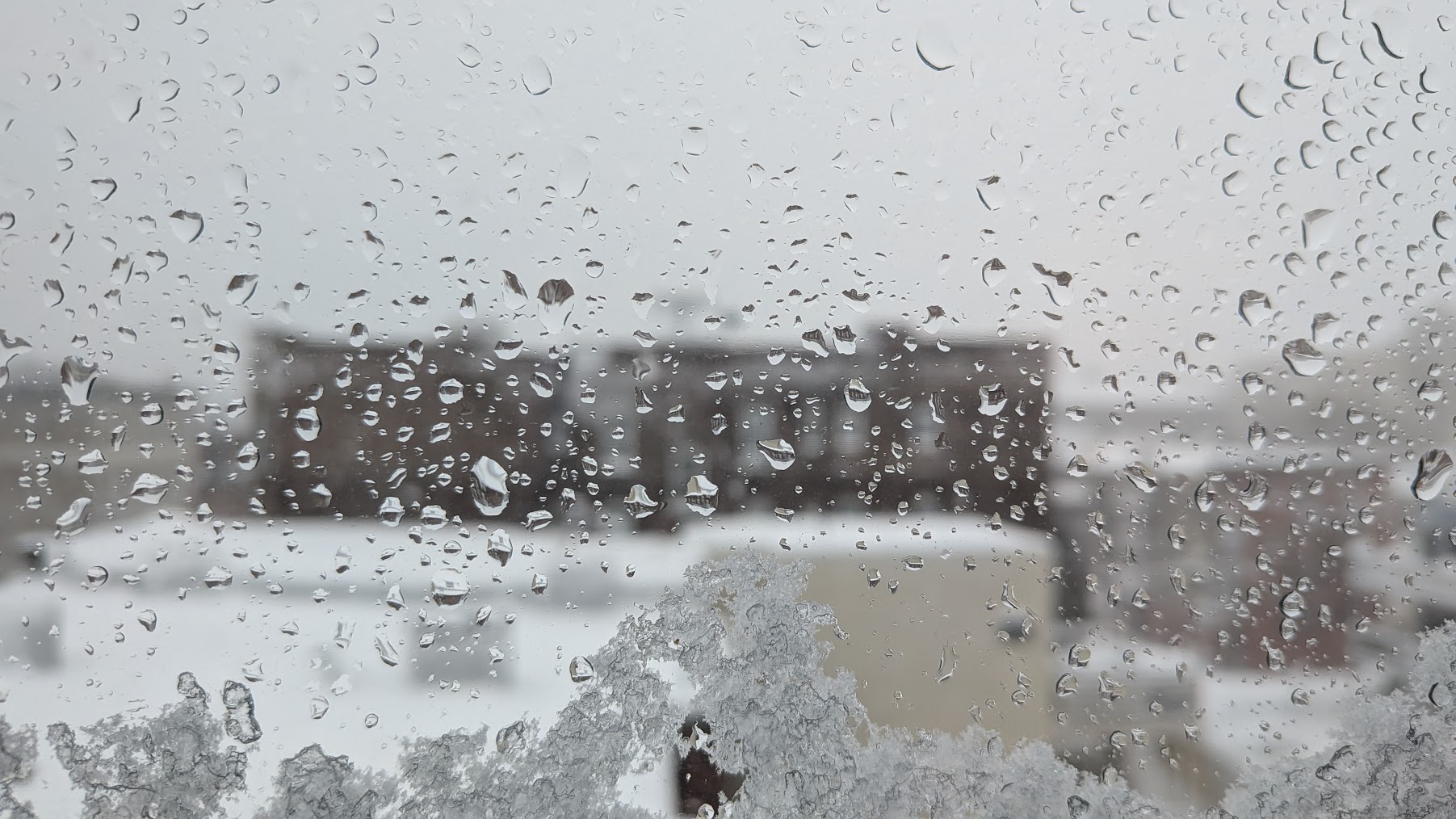
Looking out the window, I see a lot of snow. It’s a different view once you’re on the street, obviously, and I won’t see that until tomorrow. I have this feeling of apprehension for some reason. The Sunday night dread before a school day. But there’s really nothing to dread. It’s a good job at the fruit stand. I think it’s the agency that placed me there that is causing this feeling.
Google Gemini as a Sarah Vowell essay
The Logistics of Displacement and Frozen Fruit
On Saturday, February 21, I found myself embarking on a solo pilgrimage to Plauderville—a station in Garfield, New Jersey, that sounds less like a transit hub and more like the setting for a forgotten 19th-century vaudeville circuit. I was alone because Mike had been summoned back to his “crib” by a new parole officer. In the bureaucratic theater of the American penal system, a new P.O. is like a substitute teacher with a badge; they feel an ancestral need to flex their authority early and often, just so everyone knows who’s holding the hall pass.
Mike was disappointed—he’d been looking forward to seeing Elaine—but the state’s whim is a jealous god.
Meanwhile, Bill was still lingering south of the Mason-Dixon line, enjoying the hospitable climate of the former Confederacy while a major blizzard was being forecast for the North. It felt like a classic American juxtaposition: one man negotiating the terms of his liberty in a New Jersey apartment, another navigating the geographical ghosts of the Civil War, and both of them ultimately at the mercy of the weather and the law.
I had lunch with Elaine, Meghan, and Shelby at a diner, which is the secular cathedral of New Jersey life. I partook in the traditional liturgy: a hamburger deluxe and a chocolate shake. Afterward, Elaine and I retreated to her house to sift through the archaeological remains of Frank’s physical media. Frank had accumulated a hoard of CDs and magazines so vast it bordered on a library of Congress for the suburban obsessive. Elaine was overwhelmed, standing amidst towers of plastic jewel cases and glossy pages—the discarded artifacts of a pre-digital civilization that we were now tasked with donating or selling to some other optimistic collector.
Leaving was its own logistical comedy. The Garfield Police Department sent out a mass text warning residents to “stay indoors,” which is a lovely sentiment if you aren’t already standing on a sidewalk with a train to catch. The station I’d actually paid for was rendered unreachable by municipal decree, so we improvised a trek to the next one.
I eventually boarded a train bound for Hoboken, the city that gave us Frank Sinatra and the first recorded baseball game, only to have the engine expire in Secaucus. As the car went dark and silent, an Eastern European woman began a spirited, if futile, negotiation with the conductor. She had theater tickets; she wanted a cash refund right then and there, in the middle of a dead train in the Meadowlands. A small group of us—six or seven weary commuters bonded by the absurdity of the moment—found a dark, communal joy in laughing at her optimism.
Now, it is Monday, February 23, 2026. The blizzard arrived with the punctuality of a tax auditor, dumping eighteen inches of snow overnight. My phone buzzed with the news that the fruit stands would be closed—a rare moment of mercy in the retail world.
Bill made it back just in time to immediately leave for a class in Manhattan. It was one of those “in for a penny, in for a pound” scenarios where you commit to a plan despite the sky falling around you. Mike, however, remained trapped in the administrative amber of his parole officer’s schedule. We are communicating in the fragmented, “touch and go” style of people living through a minor siege.
I haven’t left the apartment since yesterday, when I descended four flights of stairs to help Bill with his luggage—a feat of domestic endurance that qualifies as a workout in my book. Looking out the window, the world is a monochromatic, muffled void. I feel a strange, looming apprehension. It’s that specific, curdled anxiety usually reserved for Sunday nights in middle school—the “school day dread.”
There is no logical reason for it. I like the fruit stand; it’s an honest, tactile job. But there is something about the agency that placed me there—the faceless middleman between me and the apples—that makes me feel like I’m waiting for a shoe to drop, or perhaps just for the snow to melt enough to reveal the mess underneath.